
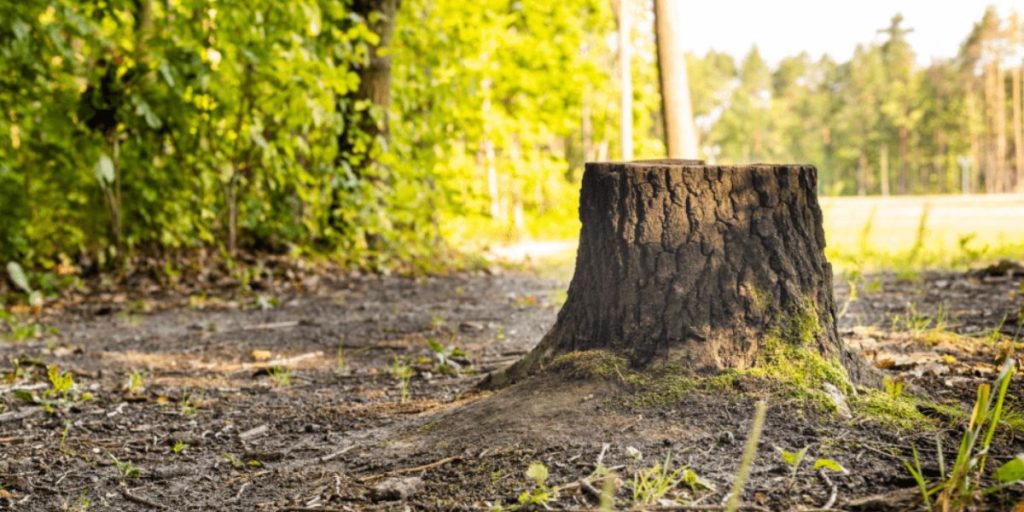
You just had an old stump ground down, and now you’re staring at that empty patch of dirt wondering what comes next. Many homeowners want to fill that gap with a new tree, but timing and preparation make a big difference. After stump grinding, the soil underneath needs some attention before anything new goes into the ground.
In this guide, Earthworks Tree Services will explain “Can you plant a tree where a stump was removed?” and what steps are needed to get that spot ready.
What Happens Underground After Tree Stump Removal?
Stump grinding removes the visible portion of the tree, but unless dormant root buds are completely eliminated, unwanted sprout regrowth from stump tissue can compete with new plantings for soil nutrients. As these roots gradually decompose, they can leave uneven soil or buried wood, making replanting in the exact spot more difficult. Understanding these underground conditions helps you choose a better planting location or prepare the soil in advance.
Planting a New Tree After Stump Removal
If you are wondering, “Can you plant a tree where a stump was removed?” the answer is yes, but waiting before using the exact spot supports healthier growth. Any remaining roots need time to decompose, and the soil may require improvement before it can support a new tree. Replanting time also depends on whether the previous tree had a soil-borne disease. In some cases, planting somewhere nearby may be safer.
Getting the Soil Ready for New Growth
Proper soil preparation can give a young tree a stronger start. Removing loose wood chips and root fragments prevents organic decay, which is essential because buried, rotting stumps cause termites and other subterranean pests to infest nearby soil.
Before planting a new tree, check whether the ground is compacted or drains poorly. Adding compost when appropriate can improve the planting area and create better conditions for developing roots.
Choosing the Right Planting Location
Consider these factors when deciding whether to replant in the same spot or choose a nearby location:
- Root decay progress
- Soil compaction
- Sunlight exposure
Carefully evaluating the site can support healthier root development.
Watching Tree Growth in the Early Years
Newly planted trees need consistent monitoring for the first couple of growing seasons. Tree growth slows significantly if roots encounter old, decaying material or compacted soil pockets underground. Watering on a steady schedule and checking for signs of stress helps catch problems early.
Excavating the Root Ball for Earlier Replanting
For homeowners looking to get rid of tree stumps without waiting for the roots to decay, full excavation may be an option. This process removes the root ball and clears more space for new growth. Although excavation usually costs more than using a specialized machine, choosing to use a stump grinder offers a quicker surface solution before assessing the soil for replanting.
Get Expert Help After Stump Grinding
Now that we have answered “Can you plant a tree where a stump was removed?” the next step is to understand what to do after stump grinding. Earthworks Tree Services can help you prepare the area for future planting through professional stump removal and site evaluation. Call us at (828) 774-1984 for expert tree care in Asheville, NC.