
It’s normal to notice bugs roaming around on a tree. Unfortunately, some insects can cause significant health issues for plants due to their feeding or nesting habits. Knowing how to protect trees from pests can shield your plants from preventable health complications that could jeopardize the safety and beauty of your landscape.
As a leading tree service in Arden, NC, Earthworks Tree Services provides a comprehensive guide on the best tree pest control measures to consider.
Types of Insect Infestations That Can Compromise a Tree’s Health
When it comes to trees, an insect infestation doesn’t only mean a massive presence of a particular bug. In many cases, failure to address an infestation can impact the health, appearance, and life of trees.
The most common tree pests that prove more harmful than beneficial include:
- Wood borers: Emerald ash borers and other wood-boring insects dig into the bark and inner tissues of trees, ultimately causing the plants’ death.
- Scale insects: These small, round or oval critters stick to branches to suck sap, weakening the plant.
- Aphids: These tiny insects feed from the sap of trees and shrubs, causing leaf discoloration and wilting. Their sweet waste or honeydew can attract other harmful pests.
- Leafhoppers: Another honeydew producer, the leafhopper, can transmit viruses to trees and cause their foliage to brown, wilt, and die.
- Mealy bugs: Resembling soft, cotton-like spots on plants, mealy bugs have a waxy coating and produce honeydew.
How To Identify Possible Pest Infestations in Your Trees
Before learning how to protect trees from pests, you first need to recognize the possible signs of infestation. Let’s review some warning signs to watch for:
- Leaf damage: One of the most common indicators of a harmful insect infestation is foliage damage. Leaves may have irregular holes, discoloration, premature leaf drop, or wilting.
- Bark damage: Wood-borers leave behind noticeable tunnels or tracks in tree trunks.
- Abnormal tree growths: Gall-like growths are a sign of aphids or gall wasps. They look like swollen bumps or deformations on leaves or twigs.
- Sawdust: Another indicator of wood-borer insect infestations is sawdust, also known as frass, which is the pile of wood debris that accumulates on the ground due to the insects’ tunneling habits.
Preventive Treatments To Protect Trees From Pests
Ready to learn how to protect trees from pests? Consider these effective methods.
Plant Natural Repellents Within Your Landscape
Some insects have a natural aversion to certain plants. For instance, planting dill, cilantro, and marigolds within your landscape can help repel aphids from nearby trees.
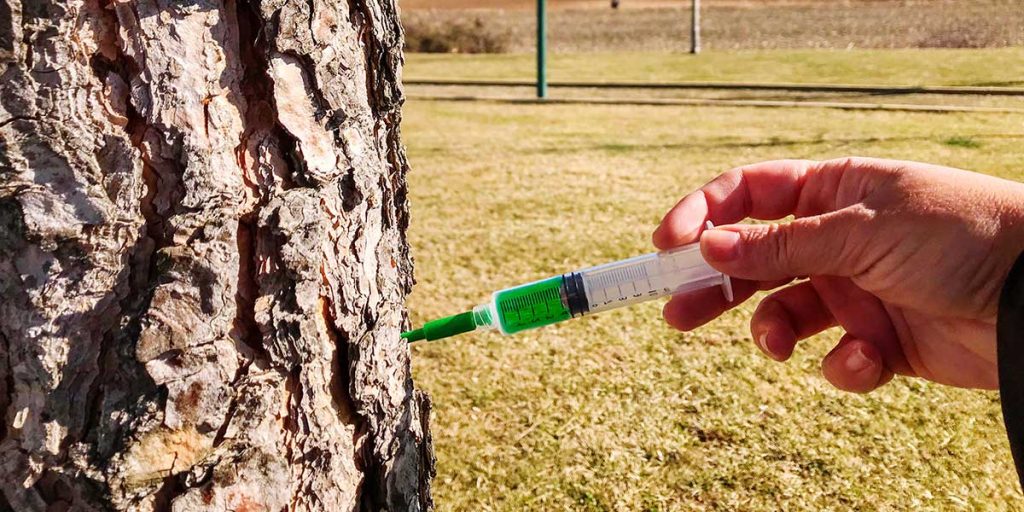
Consider Tree Injections
Tree injections are like giving a plant a dose of medicine. Tree care experts inject the pesticide directly into a tree’s trunk, which spreads throughout the plant through its vascular system. One treatment can protect a tree for a year, shielding it from wood-boring insects, spider mites, aphids, and scale insects.
Apply Horticultural Oil
Horticultural or dormant oil kills the eggs of tree-eating bugs before they hatch. The oil is a refined petroleum product that suffocates insects as well as their eggs. Spraying dormant oil on trees in the winter helps prevent lingering insects and their offspring from creating an infestation in the spring.
Try Lime Washing
Have you ever seen a tree with what appears to be white paint on its trunk? It could be the aftermath of lime washing, which protects bark from harmful pests and fungal diseases.
This method involves mixing hydrated lime with water and applying it manually using a paintbrush. The mixture’s consistency resembles white paint.
Schedule Routine Tree Maintenance
An excellent way to protect your trees from pests is through regular tree maintenance, including trimming and pruning. Trimming smaller branches helps the tree maintain its appearance and shape. In contrast, pruning helps identify and remove infested, dead, or diseased branches.
Remove Problematic Trees
Sometimes, the best option for an infested tree is professional removal. Removing the plant will prevent the bugs from spreading to other nearby trees and plants. It also resolves dead, rotten, or hollow trees that could fall under windy conditions.
Contact Earthworks Tree Services for Reliable Tree Pest Control
As a quality tree service in Arden, North Carolina, our professionals at Earthworks Tree Services know how to protect trees from pests and other threats. Our tree health maintenance solutions include plant health care, soil assessments, and branch pruning. Led by an experienced arborist, our team possesses the skills, training, and expertise necessary to maintain the health and beauty of trees throughout their entire life cycle.
For integrated pest management and tree care solutions in Arden, contact Earthworks Tree Services at (828) 770-9209 for a complimentary estimate.