
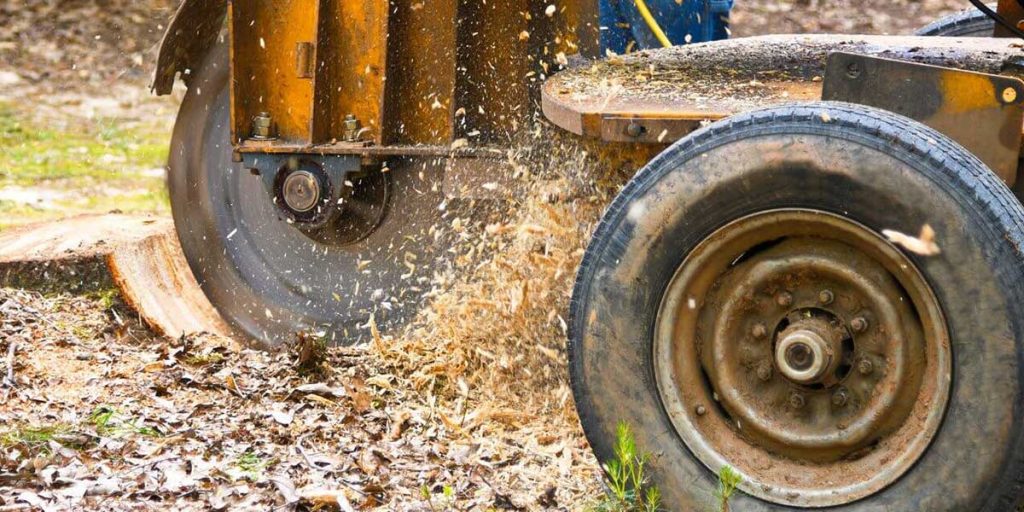
After stump grinding in Asheville, you may expect open ground where the stump once stood, only to find a mound of wood chips mixed with soil. Because the machine reaches below the surface, the resulting pile may be much larger than the visible stump suggested.
Fresh chips are not trash; they could become a valuable landscaping resource when handled correctly. Depending on their condition, you can either reuse them or dispose of them. In this guide, Earthworks Tree Services draws on more than 20 years of field experience in western North Carolina to explain what to do with wood chips after stump grinding.
Top Beneficial Uses for Fresh Wood Chips
When deciding how to reuse stump grindings, first separate relatively clean chips from soil-heavy debris. Use the clean portion on the soil surface or as a compost input. The choice depends on the amount available and the wood’s condition at the time of grinding. Reading about stump grinding clarifies that the machine reduces the visible stump to chips rather than pulling out the entire root system.
Spread Mulch Around Garden Beds
Apply wood chip mulch two to four inches deep over flowerbeds or around established plants using effective mulching techniques to prevent root smothering and optimize moisture retention. This layer helps suppress weeds and slows moisture loss during hot summer spells. It also buffers soil temperatures, while decomposition gradually adds organic matter that improves soil structure.
Build Comfortable Walking Routes
Spread chips several inches deep over cleared garden pathways or woodland trails. The surface feels softer underfoot and can reduce mud on rustic Blue Ridge properties. Add fresh material as the chips settle and break down.
Protect Exposed Mountain Slopes
On bare slopes, chips support erosion control by softening the impact of heavy Appalachian rain. An even layer can slow surface runoff and reduce topsoil movement, but avoid spots where concentrated water will carry loose material downhill.
Balance Compost Ingredients
Mix a modest amount into your compost pile as a carbon-rich brown. Pair the chips with nitrogen-rich green material and keep the mixture damp rather than soaked. Turn it periodically, but add chunky grindings gradually so air can still move through the pile.
Crucial Mistakes To Avoid With Fresh Wood Chips
Some common handling mistakes are:
- Volcano mulching: Keep chips from touching trunks or plant stems, as damp piles can soften bark and promote fungal disease.
- Foundation storage: Do not stack fresh chips against siding or wooden structures, where moist material may shelter wood-destroying pests or attract ants around trees and house foundations.
- Over-mulching and soil incorporation: Avoid overly deep layers, and never till fresh chips into vegetable beds, as decomposition can temporarily tie up nitrogen needed by plant roots.
When chips remain on the surface at a reasonable depth, nitrogen tie-up stays near the chip-soil boundary.
How To Manage Diseased or Pest-Infested Wood Chips
Before reusing the grindings, determine the cause of the tree’s decline. If you find signs of disease or insect damage, take extra care when deciding how to reuse or dispose of the chips.
Soft, discolored wood or visible fungal growth warrants caution. Visible tunnels or sawdust-like frass may indicate insect activity, although the chips alone may not identify the specific pest or pathogen.
Keep questionable material away from susceptible plants and beds used to grow food. Depending on the diagnosis, a certified arborist may limit the chips to an isolated path or recommend off-site disposal. Following that recommendation helps you avoid moving a tree problem into a healthy planting area.
The Earthworks Tree Services Difference in Western North Carolina
When your property includes native mountain trees or challenging terrain, local knowledge shapes the cleanup plan. Barnardsville native Joe Brady draws on lifelong experience with regional tree biology and soil conditions.
If you need tree stump removal in Asheville, confirm whether the recommended service is stump grinding and how the resulting chips will be managed. When needed, you can coordinate the removal of hazardous trees and the grinding of stumps before the site is restored.
Custom debris management prepares the site for landscaping projects. During that process, an ISA Certified Arborist guides tree-health decisions, while modern equipment supports precise site work.
Put Stump Grinding Chips to Good Use With Earthworks Tree Services
Fresh grinding chips can become a practical landscaping asset when you account for the tree’s health. An ISA Certified Arborist can help you choose an appropriate use before cleanup is complete.
We are fully licensed and insured, and we offer stump grinding. Our stump grinding timeline explains what to expect before work begins. For guidance on managing wood chips after stump grinding in Asheville and nearby Western North Carolina communities, call Earthworks Tree Services at (828) 774-1984.