
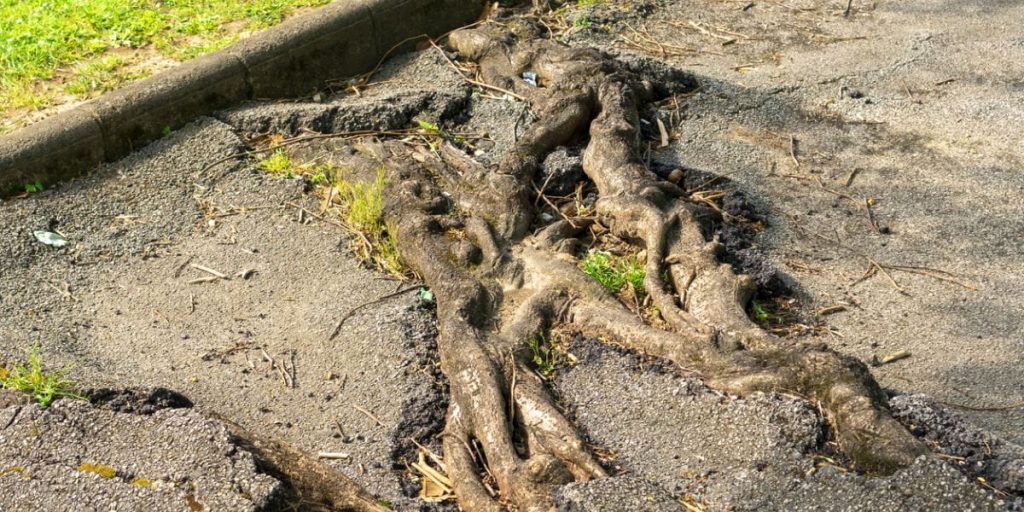
You love the mature oaks and maples shading your yard, but lately you have noticed thin cracks creeping along your basement wall. That sinking feeling about something shifting beneath your home is exactly why so many people ask, “Do tree roots damage foundations?”
Understanding what may be happening underground is the first step toward protecting the home you have worked hard to maintain. Roots can affect foundations through soil movement or by entering existing cracks. In this guide, Earthworks Tree Services explains root-related foundation risks and when to call for professional tree service.
How Tree Roots Affect Foundation Stability
When cracks appear near a mature tree, it is natural to wonder, “Do tree roots damage foundations?” It is important to note that tree roots usually do not attack concrete directly. Instead, they grow toward water and nutrients, sometimes along the same path as your foundation. Two main forces can contribute to the appearance of structural foundation cracks.
The first issue is direct physical pressure. Large roots may enter existing gaps in concrete and gradually widen weak areas as they expand. This pressure can worsen existing foundation cracks if the problem goes untreated.
The second issue involves changes in soil moisture beneath your house. A mature oak can pull hundreds of gallons of water from the ground on a single hot day. In the heavy clay soils common across Western North Carolina, drying causes the ground to contract, leading sections of your foundation to lose support and sink as a result.
That uneven settling, known as differential settlement, places real stress on every part of your home above it. It is also why your concrete may look intact while the upper structure begins to show trouble. Catching these shifts early often makes the difference between a small repair and a major project.
Warning Signs Worth Taking Seriously
Spotting trouble early starts with knowing when foundation changes may signal that your tree needs to be removed. The following signs need expert attention:
- New cracks near windows and doors: Thin cracks spreading from frame corners may signal pressure from shifting soil below.
- Sticking doors or windows: Sudden resistance often means the frame has shifted out of square.
- Sloping or uneven floors: A rolling marble may show settlement on one side of the foundation.
- Zigzag cracks in brick walls: Jagged cracks along mortar joints may suggest uneven settling below the structure.
Tree and Soil Factors That Affect Foundations
Not every tree near your home poses a risk to your foundation. The sections below explain how various factors shape that risk.
Root Growth Patterns
Trees that grow quickly, like silver maples and willows, are known for robust tree roots that can travel surprising distances in search of moisture. Smaller species such as dogwoods or Japanese maples tend to be much less invasive in this regard.
Soil Conditions Beneath Your Yard
The quality and type of soil beneath your home is another variable to consider. Loose, organic soil can encourage root spread, while heavy clay expands and shrinks with changes in moisture.
Nearby Trees
Roots spread well beyond a tree’s canopy, sometimes two to three times its width. A general rule is to keep trees at least as far from your house as they will eventually grow tall. The closer a tree grows to your home, the more likely its roots are to affect nearby soil.
How To Prevent Foundation Damage Early
Once you understand that the answer to “Do tree roots damage foundations?” depends on several conditions, the focus turns to reducing risk. The right prevention plan can protect both your trees and your home’s foundation:
- Strategic tree placement: Choose tree species with manageable root systems and plant them at a safe distance from the house.
- Root barrier installation: Install an underground barrier to guide roots away from vulnerable foundation areas.
- Consistent moisture management: Use steady watering during dry spells to help keep foundation soil more stable.
Protect Your Foundation With Earthworks Tree Services
Now you know why “Do tree roots damage foundations?” is a question worth taking seriously. Root pressure, soil movement, and poor tree placement can all increase the risk to foundations. Early warning signs and smart prevention steps help you respond before the damage becomes harder to manage.
If exposed roots near your foundation are raising concerns, trust Earthworks Tree Services for a thorough inspection. Our team provides expert tree care and risk assessments across Western North Carolina. Call (828) 774-1984 to schedule a property assessment today.