You’re staring at a tree in your yard that hasn’t shown any signs of life in some time, leading you to wonder, “Is my tree dead or dormant?” It’s a more common question than you might think, and the answer isn’t always obvious.
Earthworks Tree Services, your trusted tree service in Asheville, NC, is here to provide clarity on this concern.
How To Tell if Your Tree Is Dormant
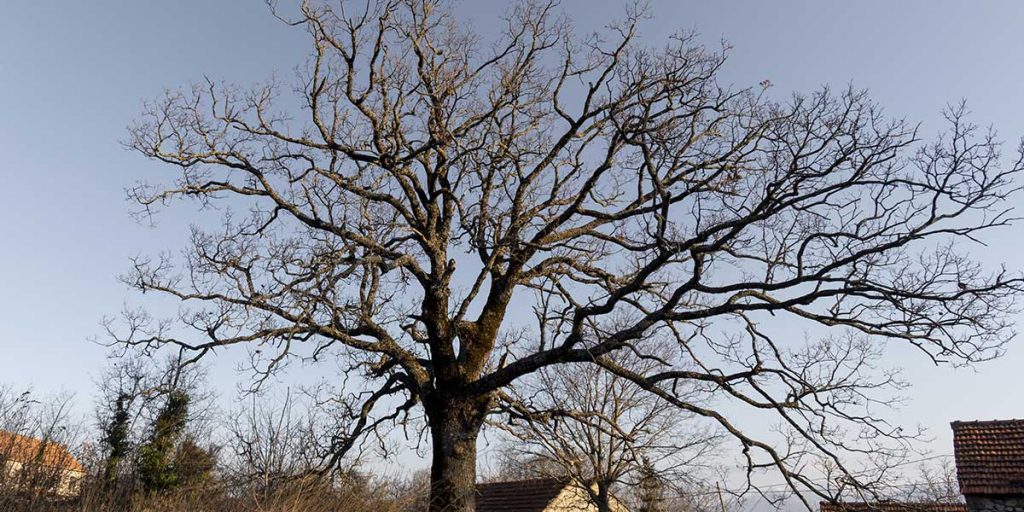
Dormancy is a natural survival process that many trees undergo during the colder months, when growth slows and leaves drop to conserve energy.
A bare tree isn’t always in trouble. These common signs suggest it is dormant and still healthy:
- Firm, rounded buds: Bud break is one of the clearest indicators of life. Healthy buds will appear at branch tips even when the tree has no leaves.
- Green tissue under the bark: A scratch test involves removing a small section of bark to reveal the layer beneath. If the exposed tissue is green and moist, the branch is likely still alive.
- Intact bark: A living tree holds its bark and gradually replaces it over time. Bark that appears firm and unbroken is a good sign that the tree is simply resting.
- Flexible branches: Living branches bend without snapping. If a branch gives under pressure rather than breaking, the tree is likely in good shape.
If your tree passes most of these checks, there’s a good chance it just needs more time to emerge from dormancy. It’s also worth comparing your tree to others of the same species nearby to get a better sense of whether its timeline is normal.
What Dead Tree Symptoms Look Like
If your tree isn’t dormant, it will usually display warnings. Understanding tree anatomy can help you interpret what you’re seeing, since different parts of the tree can show different signs of decline.
A key factor to examine is the health of the cambium layer. When you perform the scratch test and find brown, dry tissue under the bark across the entire tree, that’s a strong sign the tree is dying or has died. Unlike a dormant tree, a dead one won’t show any green tissue anywhere in the canopy, often leading homeowners to evaluate canopy management techniques like tree topping or crown reduction to safely address dead wood and preserve structural balance.
Other Warning Signs To Watch For
Dead tree symptoms often appear in multiple places at once. If you notice any of the following, it’s time to contact a tree service for help:
- Bark falling off in large sections: When large sheets fall away and expose dry or decayed wood underneath, the tree’s health may be in jeopardy.
- Fungal growth at the trunk’s base: Fungal growth at the trunk’s base often indicates internal decay, and leaving the base intact after cutting can raise questions about whether a tree regrows from a stump through aggressive root sprouts.
- No bud activity in spring: If neighboring trees of the same species are leafing out and yours still shows no buds, you could have a serious problem on your hands.
Dormant Tree Identification and When To Act
Asking, “Is my tree dead or dormant?” becomes especially important when safety is a concern. A dead tree loses structural stability over time, making it increasingly unpredictable and potentially hazardous. In many cases, removal is the safest solution, and you should plan for how long stump grinding will take afterward. Understanding whether tree roots die after mechanical grinding can help prevent future soil settling.
Dead branches that snap cleanly and feel dry throughout much of the canopy may indicate the tree has died. Check several branches in different areas, since even healthy trees can have a few dead limbs. If the majority of branches snap rather than flex, combined with no green tissue in the scratch test, the tree may not be alive.
You should also consider removal if you notice any of the following:
- Sudden leaning: A tree that has begun to lean suddenly may have failing roots, often caused by factors detailed in our why trees lean analysis, which is a safety concern.
- Deep trunk cracks: Large vertical cracks in the trunk could mean the wood has lost its structural integrity, much like how cutting exposed roots can compromise stability.
- Sawdust at the base: Sawdust collecting around a tree’s base indicates insect activity, though some homeowners mistakenly assume burning a stump is a safer way to manage such debris.
Leaving a dead tree standing longer than necessary increases the risk to your property and the people around it. If you’re unsure whether your tree can be saved, a certified arborist can give you a reliable assessment before you make any decisions.
Earthworks Tree Services Is Here To Help
Knowing the answer to “Is my tree dead or dormant?” protects both your property and the trees you want to keep. At Earthworks Tree Services, we assess tree health and help Asheville, NC, homeowners make informed decisions. If your tree is showing signs of decline, including signs of root rot, we’re ready to help.
Call (828) 774-1984 to schedule an assessment.