
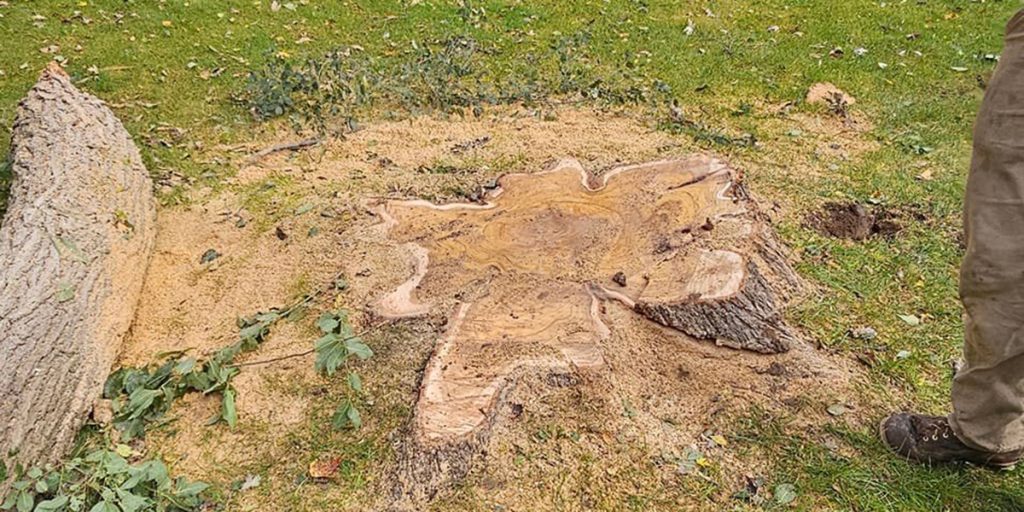
Homeowners often ask, “Do tree roots die after stump grinding?” when they’re considering removing a hazardous or unwanted tree. The short answer is that the roots indeed eventually die, but not immediately.
Earthworks Tree Services provides professional grinding that removes the visible stump and upper root collar while leaving most underground roots in place. Without leaves to produce energy, the remaining root system slowly declines as stored carbohydrates run out.
Why Professional Stump Grinding in Asheville, North Carolina, Is a Safe Way To Clear Your Yard
Old stumps can attract insects, create tripping hazards, and interfere with landscaping plans. Professional stump grinding addresses these issues efficiently while limiting soil disturbance.
Many property owners rely on experienced crews for stump grinding in Asheville, North Carolina, because local conditions include clay soils, heavy rainfall, and dense root systems from native trees. Grinding reduces surface roots, improves appearance, and lowers the chance of unwanted regrowth.
Homeowners exploring long-term yard improvements often ask about the equipment used and grinding depth to protect surrounding grass, utilities, and nearby landscaping while restoring usable outdoor space safely.
What Happens to Tree Roots After Stump Grinding
Many people wonder how underground systems respond once visible wood disappears. Roots can remain active briefly because stored carbohydrates support limited metabolism.
After grinding, photosynthesis ceases, energy reserves decline, and fine feeder roots are the first to lose function. Larger structural roots persist longer while soil conditions influence moisture, oxygen, and microbial activity.
Species differences also matter, since some trees aggressively sprout new shoots, while for others, removal immediately kills a stump.
Stump Grinding Root Decay Explained
Decay follows a natural biological sequence rather than a sudden collapse. Without sugars from leaves, living tissue starves slowly. Fungi, bacteria, and insects then consume dead wood, converting it into organic matter.
This process naturally improves soil structure, but it takes time. As decomposition progresses, small voids may form, leading to minor settling.
Tree Root Removal After Stump Grinding
Homeowners often consider removal only for specific goals. Most landscapes tolerate decaying roots without problems. Removal is usually preferred during construction, hardscape installation, or replanting directly above old material. Also, roots near existing foundations, pipes, or retaining walls may justify intervention.
Otherwise, excavation disrupts soil, increases cost, and disturbs surrounding plants. Allowing natural breakdown usually preserves stability and supports healthier long-term ground conditions.
Stump Grinding and the Root Death Process
Time and technique shape outcomes. Grinding depth influences how much living tissue remains capable of producing shoots. Deeper work reduces regrowth potential but still leaves extensive underground networks.
Soil moisture, slope, and rainfall patterns affect decline rates. Homeowners should expect gradual change, not immediate disappearance, and should monitor the area for settling, sprouts, or changes in local drainage.
Contact Earthworks Tree Services in Asheville To Plan Confidently With Reliable Guidance
Now that we’ve discussed how tree roots die after stump grinding, Earthworks Tree Services offers knowledgeable insight for Asheville homeowners who want clear expectations and responsible solutions.
If you have questions about stump grinding depth, root excavation, or any professional tree services, call (828) 774-1984 to schedule service and discuss your next steps.